









Stories can be cheeky little things.
You sit down with a lovely idea, a neat plan, perhaps even a character name you are rather proud of, and then suddenly, halfway through, everything changes. The squirrel who was meant to be shy becomes wildly adventurous. The dragon, who was meant to be scary, turns out to be terrified of toast. The ending you planned no longer feels quite right.
Panic? Absolutely not.
When a story changes midway through, it does not mean something has gone wrong. Very often, it means the story is waking up, stretching its legs and showing you what it really wants to be. For children’s book authors especially, this can be a brilliant part of the creative process.
At Happydesigner, we love helping authors bring their stories to life, from early ideas and layouts to illustration, book design and publishing guidance. So, if your story has wandered off wearing a party hat, let’s talk about why that might be perfectly OK.
Key Takeaways
- A story changing direction is not a disaster; it can be a sign that the best bits are finally popping up to say hello.
- Characters, endings, themes and visual ideas often evolve as the story becomes clearer.
- For children’s books, the big question is whether the story still delights young readers.
- Sketches, layouts and character designs can reveal new story opportunities that words alone might miss.
- A little story wobble can become something wonderful with the right creative support.
Did you know? Sometimes a tiny side character can become the star of the whole story, so keep an eye on the quiet ones.
Stories Are Living, Wriggly Things
A story is not always a perfectly behaved parcel tied with a bow. Sometimes it is more like a puppy in a paint shop. It dashes about, leaves colourful paw prints everywhere and somehow creates something much more interesting than the tidy thing you expected.
Many children’s books begin with a spark. Perhaps you have an idea for a character, a funny situation, a bedtime message or a magical world. As you write, that spark grows. You start to notice what makes the character funny, what makes the story feel warm and what moments might make a child giggle, gasp or ask for one more page.
That is when things can change.
A scene that seemed essential might suddenly feel unnecessary. A tiny side character may become the star. A serious message may need a lighter, sillier touch. None of this means the first idea was bad. It simply means it helped you find the better one.
If you are creating a picture book, the story may change even more once you start thinking visually. A sentence that feels fine on the page might become much funnier when paired with a big, expressive illustration. That is part of the magic of children’s book illustration.
Why Your Story Might Change Halfway Through
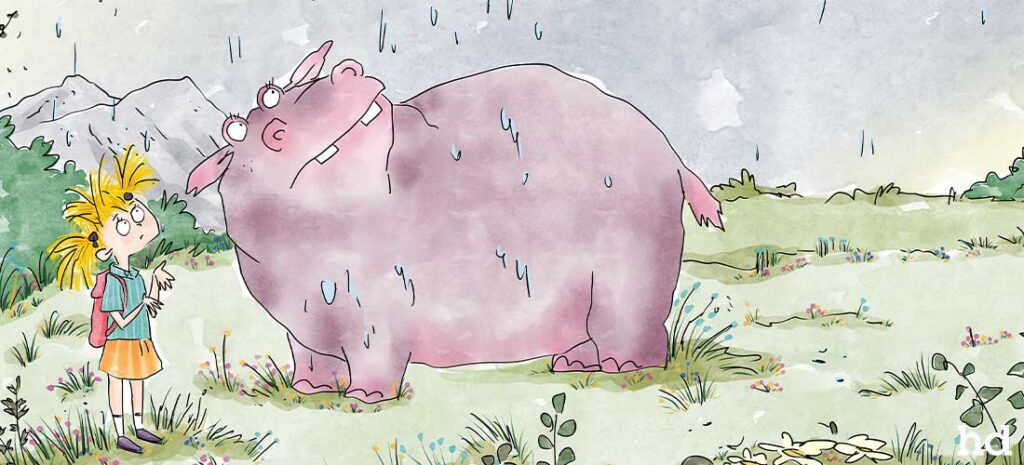
There are lots of reasons a story can suddenly wiggle in a new direction. Some are practical, some are creative, and some arrive with the subtlety of a hippo in ballet shoes.
Here are a few common culprits:
| What changes | Why it happens | What it might mean |
| The main character | Their personality becomes clearer as you write | The story may need to follow their stronger voice |
| The ending | The original ending feels too quick, flat or confusing | A more satisfying finish is trying to appear |
| The message | The theme becomes clearer during writing | The book may need a simpler, stronger focus |
| The structure | The story feels too long or busy | Some scenes may need trimming or rearranging |
| The visuals | Sketches or layouts reveal new opportunities | The illustration may help tell part of the story |
| The audience | The book feels too complicated for young readers | The language, pacing or plot may need simplifying |
Sometimes, a change happens after feedback. A proofreader, editor, illustrator or book consultant may spot something that is not quite working yet. That can feel daunting at first, but it is usually incredibly useful.
A fresh pair of eyes can help you see the story as a child, parent, teacher, or bookseller might see it. They can notice where the pace slows, where the joke gets lost or where the ending needs a little more sparkle.
That is why professional support, such as proofreading, can be so helpful before your book reaches the final design stage.
Why Changing Direction Can Be a Very Good Thing
A changing story can feel a bit like your sat nav has suddenly shouted, “Turn left into a forest!” But sometimes, the forest is where the treasure is.
When a story changes direction, it can become:
- Funnier
- Warmer
- Simpler
- More exciting
- More memorable
- Easier for children to follow
- Better suited to illustration
The new version may have a stronger emotional heart. Perhaps the book is not really about a bear looking for his socks. Perhaps it is about confidence, friendship or learning that odd socks are perfectly splendid.
A change can also improve the rhythm of the story. Children’s books often need a lovely sense of flow, especially when they are read aloud. If the story starts to feel clunky, repetitive in the wrong way or too complicated, a change in structure might be exactly what it needs.
Your story has not gone wrong. It has simply put on a different hat.
The Children’s Book Test: Does It Still Delight?
When a story changes, the most important question is not, “Did I stick to my original plan?”
The better question is, “Will this still delight the reader?”
For children’s books, especially picture books, the reader experience matters enormously. A good story should be clear enough for a child to follow, enjoyable enough to read again and visually interesting enough to hold attention from page to page.
Ask yourself:
- Is the character’s journey easy to understand?
- Does the story have a clear beginning, middle and end?
- Is there room for humour, warmth or wonder?
- Does the ending feel satisfying?
- Will the pictures help tell the story?
- Is the language suitable for the intended age group?
- Would a grown-up enjoy reading it aloud more than once?
That last one matters more than people think. A book that is fun to read aloud has a much better chance of becoming a favourite.
If your changed story still feels engaging, clear and full of charm, you may be heading in the right direction. For picture books, picture book illustration can also help shape how the story unfolds visually.
What To Do When Your Story Suddenly Changes
If your story takes a sharp turn, do not fling your notebook across the room just yet. Pop the kettle on, take a breath and investigate.
Try this simple process:
1. Write Down What Changed
Be specific. Did the ending change? Did the message change? Did a character become more important? Did the story become sillier, sadder, faster or more adventurous?
2. Ask Why It Changed
A change usually happens for a reason. Perhaps the new version feels more natural. Perhaps the old version was too complicated. Perhaps the character has become more interesting than the plot you first planned.
3. Check The Beginning
If the middle has changed, the beginning may need adjusting too. You might need to plant an idea earlier, introduce a character sooner or remove a detail that no longer matters.
4. Check The Ending
A new direction often needs a new landing spot. Make sure the final page still feels rewarding and complete.
5. Keep The Old Version
Never delete everything in a dramatic flourish. Save a copy. Future you may want one line, one scene or one splendidly silly phrase from the original version.
6. Talk It Through
Sometimes the best way to solve a story wobble is to chat with someone who understands books. A children’s book consultant can help you work out whether the new direction is stronger, or whether your story has accidentally wandered into a hedge.
How Illustrations Can Help You Find The Real Story
Illustrations do much more than decorate a children’s book. They help tell the story.
A storyboard, page layout or early character sketch can reveal things that are hard to spot in a manuscript alone. Perhaps one scene takes up too much space. Perhaps two pages are saying the same thing. Perhaps the funniest moment does not need many words at all because the illustration can do the heavy lifting.
Visual development can help with:
- Pacing
- Character personality
- Page turns
- Repeated visual jokes
- Emotional moments
- Scene clarity
- Text placement
For example, a character design might reveal that your timid tortoise has a secret superhero streak. A background detail might inspire a new joke. A page turn might create the perfect surprise.
This is why the relationship between words and pictures is so important. In a strong picture book, they work together like tea and biscuits. Lovely separately, but much better as a team.
If your story changes during the illustration process, that can be a positive sign. It may mean the visuals are helping uncover the heart of the book. Character development through character design can be especially useful here.
When To Keep Going And When To Rein It In
Of course, not every new idea deserves a throne and a tiny crown.
Some changes are brilliant. Others are distractions dressed as inspiration. The trick is knowing the difference.
A useful question is: Does this change help the story, or is it simply shiny?
Keep the change if it:
- Makes the story clearer
- Makes the character stronger
- Improves the ending
- Helps the child reader
- Creates better visual moments
- Supports the main message
Be cautious if it:
- Adds too many characters
- Introduces a second message
- Makes the story harder to follow
- Turns one book into three books in a trench coat
- Distracts from the emotional heart
A story is allowed to evolve, but it still needs shape. Think of yourself as both the explorer and the guide. Let the story wander, but do not let it run into the duck pond without supervision.
Let The Story Wiggle, Then Help It Shine
A changing story is not something to fear. It is often part of creating a better, brighter and more engaging book.
The first idea matters because it gets you started. The changes matter because they help you refine, polish and discover what the story truly wants to become. Whether your book becomes funnier, gentler, simpler or more surprising, the important thing is that it works beautifully for its readers.
So, if your story changes midway through, give it a curious look rather than a stern one. Ask what it is trying to show you. There may be a better book hiding inside the wobble.
And if you would like help turning that wobbly, wonderful story into a finished children’s book, we would be happy to help. You can get in touch and tell us all about your idea, even if it has already changed hats three times.
Further Reading
- Joyce Dunbar’s Guide To Writing Picture Books: A practical BookTrust guide on shaping picture book stories, thinking visually and understanding how the format works.
- How To Write A Children’s Picture Book: Advice from Penguin, Ladybird and Puffin on why picture books may look simple, but need careful writing, strong structure and brilliant illustrations.
- What Editors Look For In A Children’s Book Submission: A Scottish Book Trust article covering plot, character, age suitability and other story ingredients that can help authors refine their manuscript.