









The Small Spark That Starts It All
Ideas are curious little things. They rarely arrive wearing a sparkly hat and shouting, “Here I am!” More often, they sneak in quietly while we are reading a story, watching a cat stretch in a patch of sunshine, choosing a colour palette, or chatting with an author about the heart of their book.
At Happydesigner, ideas often begin with something small: a character trait, a sentence, a feeling, a memory, or a tiny visual detail that makes us smile. A funny pair of socks. A nervous dragon. A bear with a wonky hat. A determined little rabbit with a very serious mission.
That is the magic of design. The smallest spark can become a whole illustrated world.
Key Takeaways
- Designer ideas often start with tiny sparks, such as a colour, character trait, sentence, memory or funny little detail.
- Listening comes before sketching, because every creative project needs to fit the story, audience, tone and purpose.
- Colour can completely change the mood of an illustration, from cosy and cheerful to spooky and mysterious.
- Character design is about personality, movement and expression, not just drawing something that looks lovely.
- Creative blocks are normal, and sometimes the silliest sketch is the one that unlocks the best idea.
Did you know? A real rescue cat helped inspire Happydesigner’s Oh Erik! brand, proving that ideas really can wander in on four paws.
Listening Before Sketching
Before the pencils come out, we listen.
That might not sound as exciting as paint splatters and character doodles, but it is one of the most important parts of the creative process. A good idea does not float around on its own. It needs to fit the story, the audience, the tone, and the person or business it belongs to.
When we work on a children’s book, for example, we are not just asking, “What should this look like?” We are asking:
- Who is this story for?
- How should the reader feel?
- What makes this character special?
- Is the mood silly, gentle, adventurous, comforting, magical, or mischievous?
- What should a child remember after turning the final page?
The answers help shape everything that follows. The best ideas are not just pretty. They have a purpose.

The Designer’s Mind Is a Treasure Chest
A designer’s mind is a bit like a treasure chest, although probably one with crayons, biscuit crumbs and several unfinished cups of tea inside.
We collect things all the time. Not always physical things, although sketchbooks do have a habit of filling up quickly. We collect colours, patterns, faces, phrases, textures, book covers, packaging, little jokes, conversations, animals, trees, old signs, seaside shades, cosy kitchens, and the way someone’s eyebrows move when they are surprised.
Then, when a new project begins, all those little treasures start rummaging around together.
A character might borrow the posture of someone seen at a bus stop, the colours of a summer garden, and the expression of a cat who has just knocked something off a table and feels absolutely no regret.
Where Ideas Like to Hide
Ideas can come from almost anywhere, but some places are especially good at waking them up.
| Idea source | What it might inspire | Example creative result |
| A story sentence | Mood, setting or character expression | A gloomy forest, a brave face, a hidden door |
| A real animal | Personality, movement or humour | A cheeky cat, loyal dog or fussy pigeon |
| A colour palette | Emotion and atmosphere | Calm blues, sunny yellows, cosy oranges |
| A client’s memory | Authentic detail | A family home, favourite toy or special place |
| A child’s perspective | Playfulness and simplicity | Bigger emotions, bolder shapes, sillier details |
| A design brief | Structure and purpose | A book cover, logo, layout or brand identity |
The trick is not simply to wait for ideas. It is to notice them.
Colour Has a Voice Too
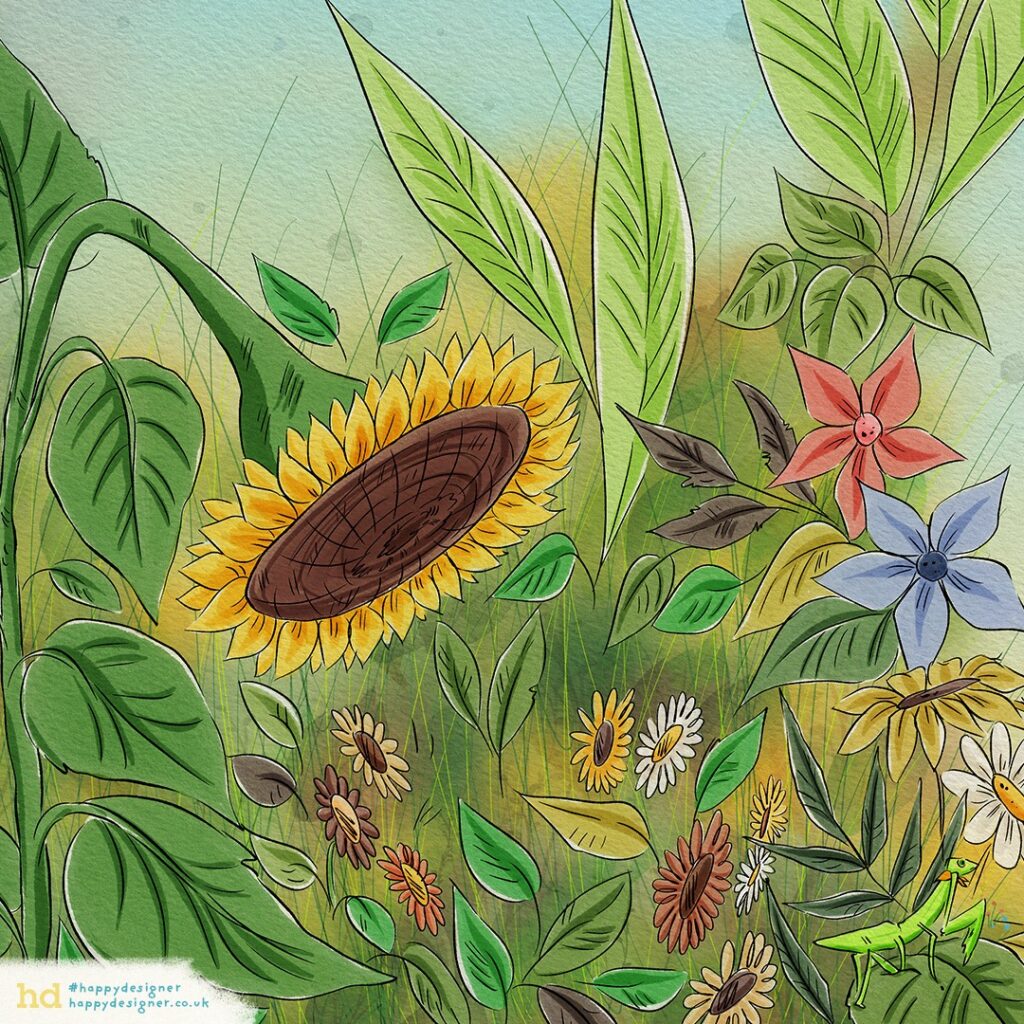
Colour is never just colour. It whispers, giggles, shouts, comforts, warns and celebrates.
A bright yellow can feel cheerful before a single word is read. A soft blue can calm a busy page. A deep purple can suggest mystery. A splash of red can pull the eye straight to something important. In children’s book illustration, colour can help guide the reader through the story and make the artwork feel more exciting, emotional and memorable.
Sometimes colour is the starting point. We may look at a scene and ask, “Should this feel warm and safe, or chilly and strange?” The answer can change everything.
A cave lit with golden lanterns feels cosy. The same cave in green shadows might feel spooky. Add a tiny mouse holding a biscuit, and suddenly it becomes funny. That is the joy of visual storytelling.
Characters Often Arrive With Opinions
Characters are not just drawings with eyes. Good characters have personalities. They have little habits, worries, hopes, and ways of standing that tell us who they are before they even speak.
When designing a character, we might ask:
What does this character want?
A character chasing a dream will look different from one trying to hide from bath time.
How do they move?
A proud lion may stride. A shy hedgehog may curl inwards. A toddler may wobble with magnificent confidence.
What makes them memorable?
It could be a shape, a colour, a hat, a fringe, a tiny bag, a big grin, or an expression that says, “I definitely did not eat the cake.”
Character design is one of the places where ideas become especially playful. A few simple choices can make a character feel real, lovable, and ready for adventure.
Sketching Is Thinking With a Pencil
People sometimes imagine that the first sketch is the idea. Usually, it is just the beginning of the conversation.
Sketching helps us think. It lets us test shapes, try expressions, move things around, make mistakes and discover surprises. A rough drawing might look messy, but it is doing an important job. It is helping the idea stretch its legs.
There may be several versions before a character feels right. Too tall. Too serious. Too fluffy. Not fluffy enough. Needs bigger boots. Definitely needs a hat.
That is all part of the process. A polished illustration often begins with wobbly doodles and brave little experiments.
Ideas Need a Job to Do
At Happydesigner, we love creativity, but design also needs to work.
An illustration should support the story. A book cover should make someone want to pick up the book. A logo should help a business feel recognisable. A layout should make reading feel easy and enjoyable. A character should connect with the reader.
That means ideas are not chosen only because they are pretty. They are chosen because they help communicate something.
A good design idea might:
- Make a story easier to understand
- Help a character feel more believable
- Create the right emotional tone
- Make a book, brand, or illustration stand out
- Give the reader a reason to keep looking
Creativity is fun, but it is also thoughtful.

Collaboration Makes Ideas Brighter
Some of the best ideas grow through collaboration. An author may bring the story, the heart and the message. A business owner may bring the passion behind their brand. We bring creative experience, illustration skills and a love of turning ideas into something visual.
The process works best when it feels friendly and open. You might have a very clear picture in your head, or you might only have the tiniest starting point. Both are absolutely fine.
Sometimes a client says, “I know exactly what I want.”
Sometimes they say, “I have no idea, but I know how I want it to feel.”
Both can lead somewhere wonderful.
When Inspiration Gets Stuck
Even designers have moments when ideas refuse to behave. They hide behind the sofa. They sulk. They wander off and make a sandwich.
Creative blocks are normal. The important thing is not to panic. Often, the answer comes from changing the approach.
A few useful tricks include:
- Taking a short break
- Reading the brief again
- Drawing the opposite of the obvious idea
- Trying a new colour palette
- Making a deliberately silly version
- Looking at the character’s emotion rather than their appearance
- Asking, “What is this really about?”
Sometimes the silly version is exactly what unlocks the sensible one.
The Final Idea Is a Team Effort
A finished design may look simple, but it is usually made from lots of small decisions working together.
The character’s eyes. The curve of a smile. The space around the text. The colour of the sky. The texture of a jumper. The shape of a logo. The rhythm of a picture book page. The way one illustration leads into the next.
Each little choice helps create the final feeling.
That is why design is both playful and precise. We get to imagine, explore and doodle, but we also think carefully about how everything fits together.

So, Where Do Ideas Come From?
Ideas come from curiosity. They come from listening, looking, sketching, playing, problem-solving and paying attention to tiny details. They come from real life, from stories, from colour, from characters, from clients, and sometimes from a ginger-and-white rescue cat with excellent creative timing.
Most of all, ideas come from starting.
A scribble can become a character. A character can become a book. A book can become something a child remembers for years.
So, if you have a story, character, book, brand or creative project bubbling away, do not worry if it is not fully formed yet. Every lovely idea starts as a little spark. We rather like little sparks.
Have a story, character, book or brand idea bubbling away? Contact us to help turn that little spark into something beautifully illustrated.
Further Reading
- Colour Psychology in Children’s Books: How Colours Influence Young Minds: A lovely companion piece for readers who enjoyed the section on how colour can guide emotion, mood and storytelling.
- The Importance of Colour in Children’s Books: A helpful Happydesigner read about why colour matters so much when creating illustrations for young readers.
- The Double Diamond: A reputable design resource from the Design Council that explains how ideas can grow through discovery, definition, development and delivery.
- The Benefits of Illustrations in Books for Children: A BookTrust article exploring why pictures in children’s books matter, making it a gentle extra read alongside the article’s illustration themes.